Diligence before design
Drawings are cheap to produce and expensive to defend. The entitlement path is established first, and the design follows what that path will actually support — not the other way around.
A non-conforming double-lot assembled for residential development.
Active — Raising Capital
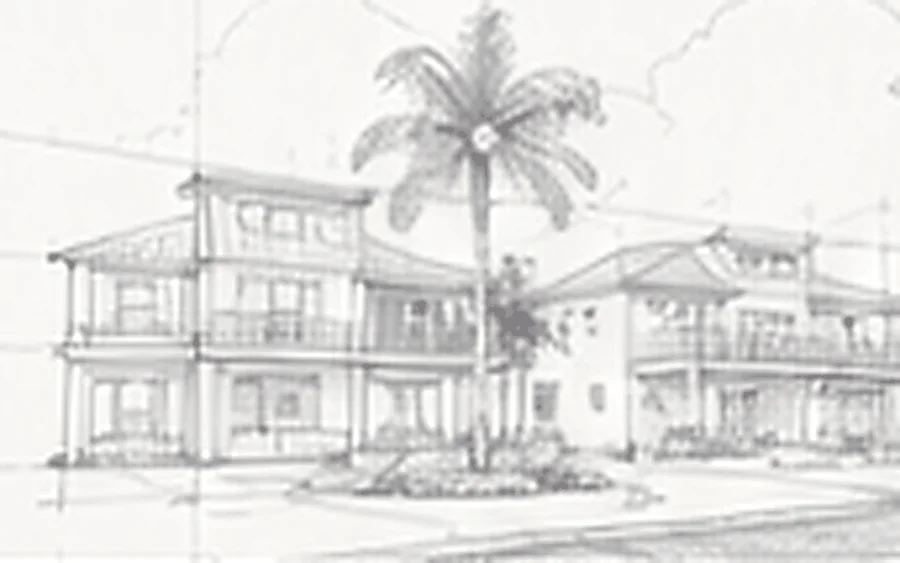
Coastal infill parcels rarely arrive clean. This one arrived as a question about what the land was legally permitted to become — not as a design brief.
In built-out beach communities, much of the land was platted under rules that no longer exist. Two adjoining lots can read as one obvious development site on a map while remaining two separate legal descriptions, each carrying its own frontage, setback, and use conditions inherited from an earlier code. None of that is unusual. What matters is whether the distance between what the plat says and what current regulation contemplates can be closed, and what closing it would actually require.
So the first work is not architectural. It is establishing, in writing and in the right order, what the parcel can support and what the approval path really looks like — before a single dollar is committed to a drawing that the code may not permit.
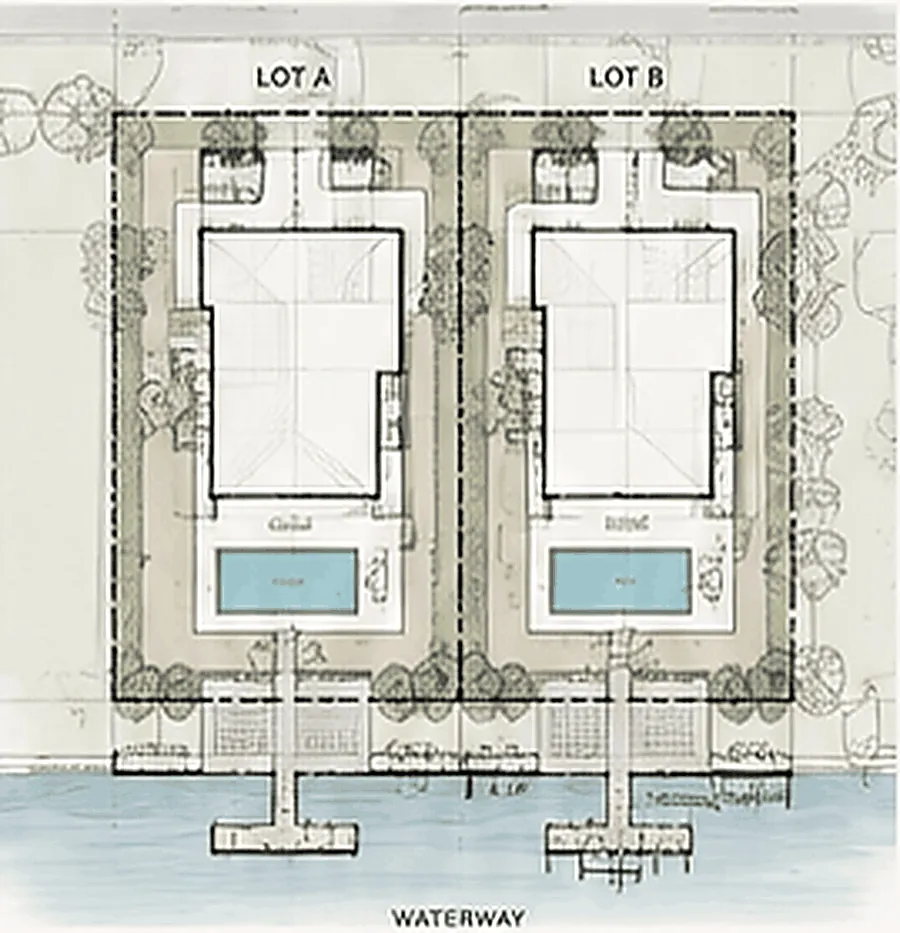
Prove the plan before spending money on it. Every step below exists to retire a specific risk, in the order that risk actually shows up.
Identify the right opportunities.
Validate, design, and structure.
Manage, build, and implement.
Deliver outcomes you can measure.
Drawings are cheap to produce and expensive to defend. The entitlement path is established first, and the design follows what that path will actually support — not the other way around.
Survey, land use, design, and capital are coordinated by the same party. Nothing gets handed across a gap on the assumption that somebody else already caught it.
Findings, conditions, and approvals are documented as they happen, so the record supporting the plan is assembled continuously rather than reconstructed under deadline.
The workstreams below run in sequence, with each one gating the next. This is the method applied to Madeira Beach and to development opportunities like it.
Assemble the plat history, legal descriptions, easements, and prior approvals into one reviewed record, then identify where those documents disagree with each other.
Map the parcel against the land use and zoning regulation in force, isolate each non-conforming condition, and define the specific approval route that condition requires.
Engage licensed surveyors, engineers, and design professionals, scope their work to the questions that actually decide the project, and hold the schedule between them.
Determine whether the lots are best held, combined, or reconfigured, and structure ownership so that the development plan and the capital plan describe the same thing.
Assemble the diligence package, define the use of funds, and present the opportunity in the form a partner or lender can evaluate on its merits rather than on a narrative.
Sequence approvals, permitting, and construction so the plan that was approved is the plan that gets built, with licensed trades performing the work and deviations surfaced early enough to address.
Active — Raising Capital
Madeira Beach Development is listed as an active opportunity at the capital stage. It is open to capital partners, and the project documentation that supports the plan is provided on request.
Active means active. Nothing here is presented as a closed transaction. No economics, detailed terms, timelines, or projections for this project are published on this site — those are reviewed directly, with the context that makes them meaningful, in conversation.
The same discipline that governs the diligence work governs the reporting from here: what is decided gets written down, and what is still open is named as open.

| Division | Development |
|---|---|
| Project type | Residential development site |
| Summary | A non-conforming double-lot assembled for residential development. |
| Role | Development sponsor and project coordination |
| Status | Active — Raising Capital |
| Documentation | Provided on request |
If this is the kind of opportunity you work in, the sequence from here is short and deliberate.
A short call to establish fit — what you invest in, at what size, and on what timeline. If it is not a match, we say so on that call rather than three meetings later.
Project documentation is provided on request, so you are evaluating the same material we are rather than a summary written to persuade you.
Ownership, terms, and reporting cadence are worked out directly and put in writing before anyone commits capital or a signature.
Madeira Beach Development is an active opportunity, not a completed transaction. Its status is Active — Raising Capital, and it is described here as method and process rather than as a finished result.
Nothing on this page is an offer to sell or a solicitation of an offer to buy any security, interest, or property, and nothing here is investment, legal, or engineering advice. Collaborative Concept is not an architect, engineer, contractor, broker, appraiser, or attorney; licensed professionals are engaged for that scope.
Project documentation, current status, and structure details are provided on request.